Chengdu Travel Guide: Giant Pandas, Teahouses & 3 Days
Chengdu is mainland China's most unhurried, flat major city: morning giant pandas, afternoon bamboo-chair teahouses in People's Park, and evening Sichuan food. Give it 3 to 4 days, arrive at the Panda Base at 07:30 sharp before the pandas go to sleep, and check whether your flight uses distant Tianfu Airport (TFU) or closer Shuangliu (CTU).
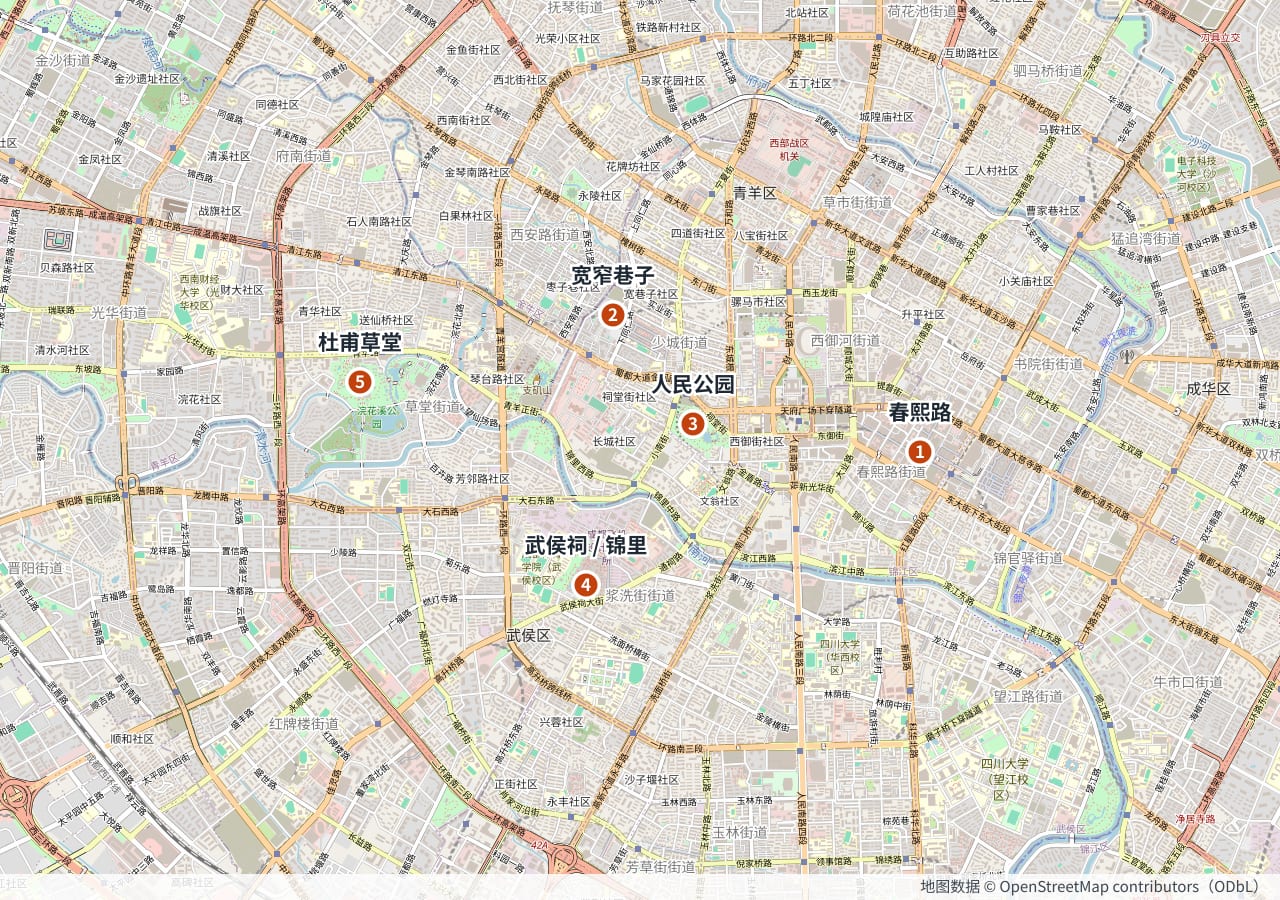
Map: OpenStreetMap. Numbers added by Arrive China — © OpenStreetMap contributors (ODbL)
Getting there: the sights, the nearest station, and how to walk it
-
1 Chunxi Road / Taikoo Li 23
Chunxi Road
Lines 2 and 3 interchange at Chunxi Road, and you are there at the exit. This is Chengdu's busiest shopping district. Taikoo Li is a low-rise open-air mall, and the IFS tower next to it has a giant panda sculpture climbing its outside wall — the city's most-photographed spot. It stays busy until about ten at night.
-
2 Kuanzhai Alley 4
Kuanzhai Alley
Line 4 to Kuanzhai Alley, five minutes on foot. Three parallel Qing-dynasty lanes — Wide, Narrow and Well — restored and now full of teahouses, snacks and shops. Before 9 a.m. it is almost empty; afternoons and evenings are packed. The ear-cleaning you will see in the lanes is a Chengdu speciality: agree the price before you sit down.
-
3 People's Park 24
People's Park
Lines 2 and 4 interchange at People's Park; it is right at the exit. The park is free, and the reason to come is the Heming teahouse inside it: bamboo chairs in the open air, priced by the pot (a few tens of yuan buys you an afternoon), refills included. This is how people in Chengdu actually spend time, not a performance for visitors.
-
4 Wuhou Shrine / Jinli 3510
Gaoshengqiao (exit A, 10 min walk)
A common mistake first: guides often name a "Wuhou Shrine" station, but it is not actually close. The easiest approach is Gaoshengqiao, where Lines 3, 5 and 10 interchange: exit A, then ten minutes north on foot. The shrine commemorates Zhuge Liang, chancellor of the Shu kingdom in the 3rd century, and needs a ticket. Jinli next door is a mock-antique food street, free, and better after dark when the lanterns are on.
-
5 Du Fu's Cottage 4
Caotang North Road
Line 4 to Caotang North Road, then ten minutes on foot to the north gate. Du Fu was an 8th-century poet who lived here while a refugee in Chengdu; the site is now a quiet garden where the bamboo and the ponds are more rewarding than the buildings. It is never crowded and makes a good hour and a half between busier stops.
Off this map
-
Giant Panda Base 3
Panda Avenue exit A → shuttle 408
Not on this map: about 12 km north of the centre. Take Line 3 to Panda Avenue, exit A, then shuttle bus 408 to the south gate; or get off at Junqu Zongyiyuan, exit B, and take shuttle 409 to the west gate. Timing matters more than the route: the pandas are active while it is cool in the morning and mostly asleep after nine or ten, so aim to be there when it opens. Book in the official mini-program in advance.
Chunxi Road, People's Park, Kuanzhai Alley and the Wuhou Shrine are strung along Lines 2, 3 and 4, two or three stops apart. The panda base is north of the city, needs the metro plus a shuttle, and has to be a morning.
The base map is OpenStreetMap, so it is to scale rather than a schematic. The number in each orange dot matches the list below, and every entry gives the nearest station, which exit to use, how long the walk is, and what to know once you arrive.
If Beijing is a fast march across imperial plazas, Chengdu is where your China itinerary slows down to the pace of a covered teacup. The streets are flat, the metro is effortless, and high-speed rail pairs it naturally with Chongqing or Xi’an (see the full entry comparison in which city to visit first in China).
Quick facts
| Item | What to expect |
|---|---|
| Airport to centre | Shuangliu (CTU) Metro Line 10 ~30 min; Tianfu (TFU) Metro Line 18 express ~50–70 min |
| Suggested stay | 3–4 days (3 days in the city + 1 day trip to Leshan Giant Buddha or Sanxingdui) |
| Metro English | Full English signage and announcements; scan the Alipay Chengdu Metro QR code |
| Best months | March–May and September–November (mild; Jul–Aug is hot and muggy, Dec–Feb is grey and damp) |
| Next stop | High-speed rail: 1–1.5 hr to Chongqing, 45 min to Leshan, 3.5–4 hr to Xi’an |
Who it fits, who should skip
Who it fits: Travellers coming for giant pandas, Sichuan food, open-air park teahouses, Sanxingdui bronze masks, and a flat city that does not punish tired legs.
Who should skip: Anyone who cannot stand the smell of chili oil and Sichuan peppercorn, or sun-seekers who dislike overcast skies (the Sichuan Basin is misty most of the year).
How many days you need
Give Chengdu 3 to 4 full days.
The Panda Base takes a morning, People’s Park plus Wuhou Shrine or Du Fu Thatched Cottage takes another day and a half, and a 4th day lets you ride a 45-minute high-speed train to the Leshan Giant Buddha or a 20-minute train to the Sanxingdui Museum without changing hotels.
Three days, in order
Chengdu moves slowly. Do not stuff more than three sights into a day, and leave time to drink tea.
Day 1: pandas, People’s Park and Kuanzhai Alley
| Stop | Ticket | To the next stop |
|---|---|---|
| Chengdu Research Base of Giant Panda Breeding | ¥55 | ~40 min by metro |
| Heming Teahouse in People’s Park | free; tea a few yuan | 15 min on foot |
| Kuanzhai Alley | free | 15 min on foot |
| Dinner on Kuixinglou Street | free | — |
Go to the panda base early — be inside when it opens at 07:30, because after 10:30 the pandas go back to sleep. Take Metro Line 3 to Panda Avenue station and change to the shuttle, or simply take a taxi. Book the ticket in advance with your passport.
Heming Teahouse in People’s Park is bamboo chairs and covered tea bowls; twenty yuan buys you an afternoon watching locals play cards and get their ears cleaned. At Kuanzhai Alley, one loop to look at the old courtyard walls is enough. Do not eat on the main lane — walk five hundred metres to Kuixinglou Street instead.
Day 2: Wuhou Shrine, Du Fu’s Thatched Cottage and Qingyang Palace
| Stop | Ticket | To the next stop |
|---|---|---|
| Wuhou Shrine | ¥50 | 15 min on foot |
| Jinli | free | 15 min by taxi |
| Du Fu’s Thatched Cottage | ¥50 | 10 min by taxi |
| Qingyang Palace | ¥10 | — |
Wuhou Shrine and Jinli adjoin each other. Jinli is a mock-antique shopping street — pretty when the lanterns come on at night, but the goods are overpriced. The gardens at Du Fu’s Thatched Cottage are better to wander than you would expect, and quiet.
Qingyang Palace is a Taoist temple. Ten yuan, few people, good for a slow walk.
Day 3: Dujiangyan or Sanxingdui
| Stop | Ticket | To the next stop |
|---|---|---|
| Dujiangyan (half an hour by intercity rail) | ¥80 | — |
| or Sanxingdui Museum (20 min by high-speed rail to Guanghan) | ¥72 | — |
Dujiangyan is a Qin-dynasty irrigation works still in use more than two thousand years later. The Fish Mouth levee, the Flying Sand Weir and the Bottle-Neck Channel are worth seeing, and the whole site takes two to three hours. Sanxingdui is the bronze spirit tree and the masks — more visually startling, but the tickets are hard to get and need booking ahead.
Trying to fit both into half a day each does not work. Pick one. With children, go pandas plus Dujiangyan; if you are interested in history, go Sanxingdui.
Airport to the city centre
Chengdu has two airports at very different distances—always check the three-letter code on your ticket:
- Chengdu Tianfu International Airport (TFU): handles all international flights and many domestic routes, located 60 kilometres southeast of the centre. Ride Metro Line 18 (take the Express train) to South Railway Station and transfer to Line 1, which takes about an hour.
- Chengdu Shuangliu International Airport (CTU): domestic hub only 16 kilometres from the centre; Metro Line 10 or a taxi gets you downtown in 30 minutes.
If you have an early flight before 08:00 out of TFU, sleep near the airport or along southern Metro Line 18 the night before (see airport rides, DiDi, and metro tips).
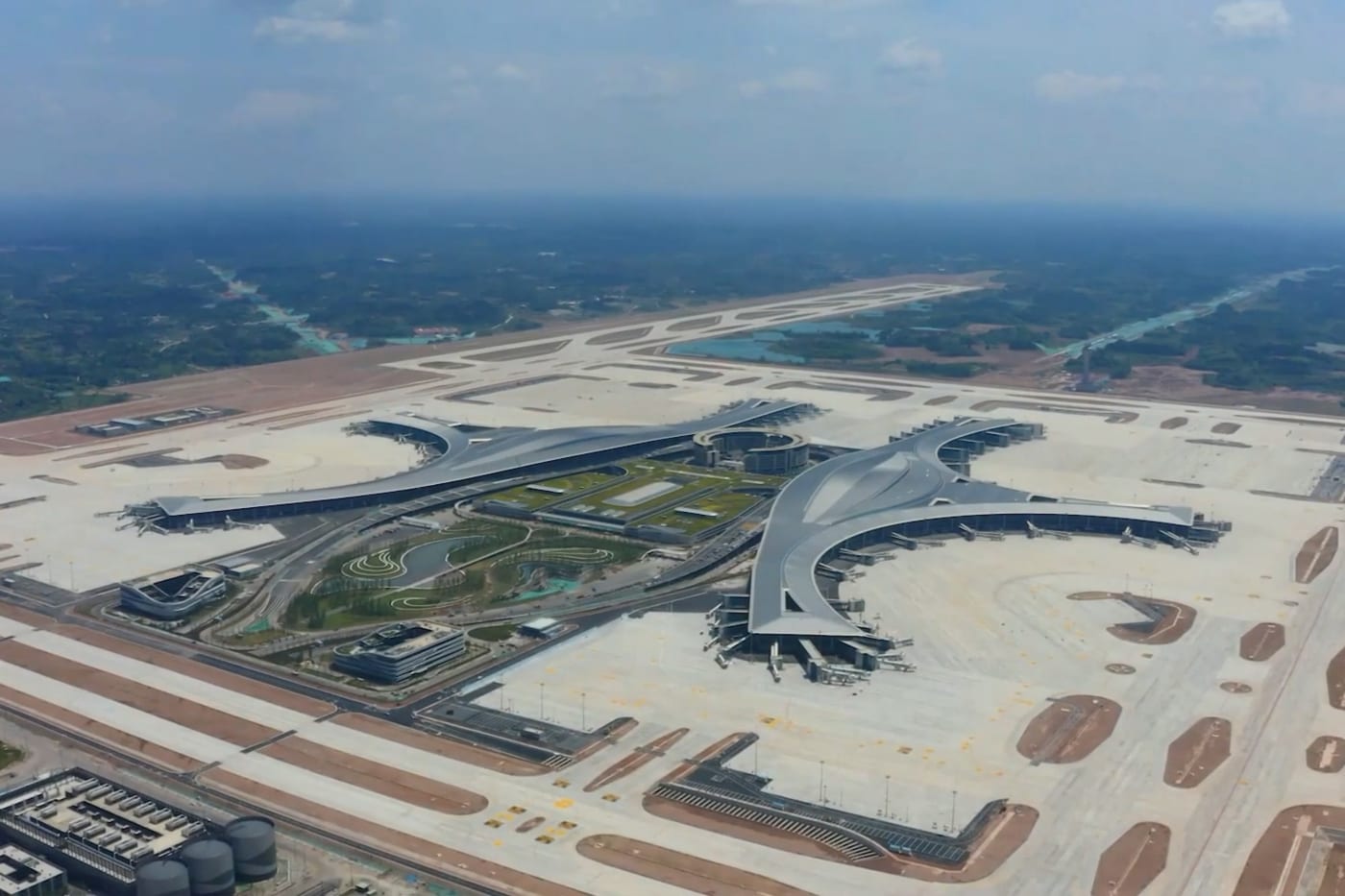
Photo: FATIII Aviation / CC BY 3.0, via Wikimedia Commons
Where to stay
Chengdu is flat and rings out from Tianfu Square; pick a base near Metro Lines 1, 2, or 3 (and verify foreign-passport registration via how to book hotels that accept foreigners):
- Chunxi Road / Taikoo Li / Dongmen Bridge (Best all-round base): sits on Metro Lines 2 and 3, just 15 minutes by metro from Chengdu East Railway Station (
成都东站), surrounded by late-night snacks, teahouses, and modern hotels. - People’s Park / Tianfu Square (Quiet central base): puts you on Lines 1 and 2 within walking distance of Heming Teahouse and Kuanzhai Alley.
- Far southern Hi-Tech Zone glass towers (Business only): convenient for Metro Line 18 to TFU Airport, but sterile at night and far from old Chengdu streets.
Three things worth your time
- Chengdu Research Base of Giant Panda Breeding at 07:30 opening: book your morning passport ticket online ahead of time (see which attraction tickets sell out). Take Metro Line 3 to Panda Avenue (
熊猫大道) or General Hospital station for the shuttle, and head straight to the sub-adult panda enclosures between 07:30 and 09:30 while they are eating bamboo. - An afternoon pot of tea at Heming Teahouse in People’s Park: no admission ticket needed. Pay ~20–30 RMB for a covered cup (gaiwan) of jasmine or green tea, sit in a bamboo chair by the pond, and refill hot water from the thermos all afternoon.
- Half-day train trip to Leshan Giant Buddha or Sanxingdui Museum: take a high-speed train from Chengdu East Station (
成都东站)—45 minutes south to Leshan (take the river boat for the full view of the 71-metre cliff Buddha) or 20 minutes north to Guanghan for Sanxingdui’s bronze masks.
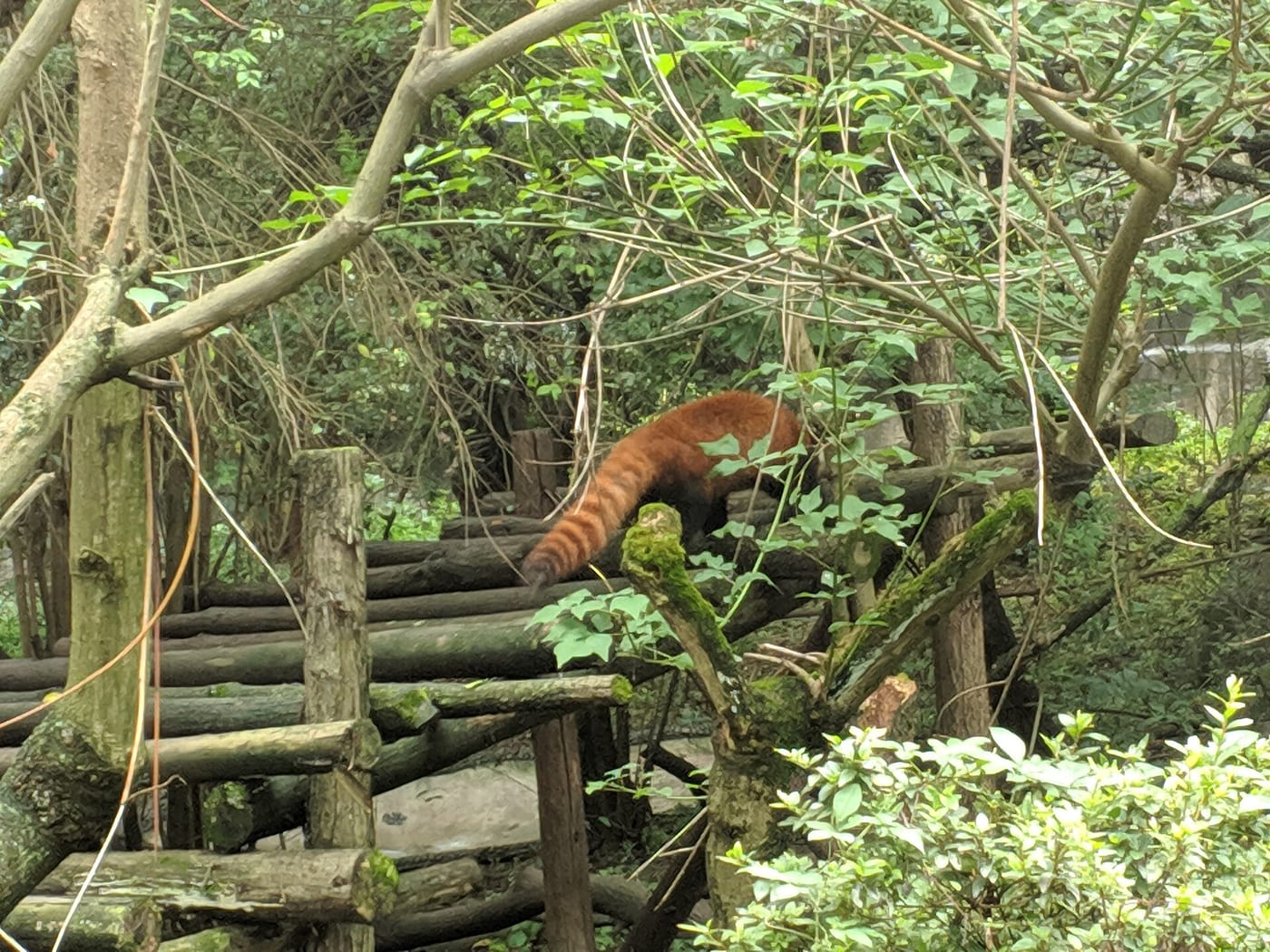
Photo: Jimmyshjj / CC BY-SA 4.0, via Wikimedia Commons
What to eat and how to order
Sichuan cuisine is famous for mala (numbing Sichuan peppercorn plus chili), but roughly a third of traditional Sichuan dishes use zero chilies:
- Great non-spicy Sichuan dishes to order: dan hong gao (stuffed mini pancakes), brown-sugar rice cakes (
红糖糍粑), laoma tihua (slow-simmered white trotter soup), tea-smoked duck (樟茶鸭), and clear mushroom or tomato hotpot broth. - Classic spicy staples: Mapo tofu, twice-cooked pork (
回锅肉), fuqi feipian, and chuanchuan skewers. The tingling buzz on your lips comes from citrusy Sichuan peppercorn (花椒), not capsaicin.
If you have a peanut/sesame allergy, eat vegan, or require Halal food, show the Chinese food allergy and vegetarian card before ordering, and see how to order non-spicy food in China.
Getting around locally
Chengdu is flat and easy to cross by metro and shared bikes.
Activate the Chengdu Metro QR code inside Alipay to tap through every station, and use Metro Line 2 to reach Chengdu East Railway Station (成都东站) for high-speed trains (book your rail tickets in advance with 12306 with a foreign passport).
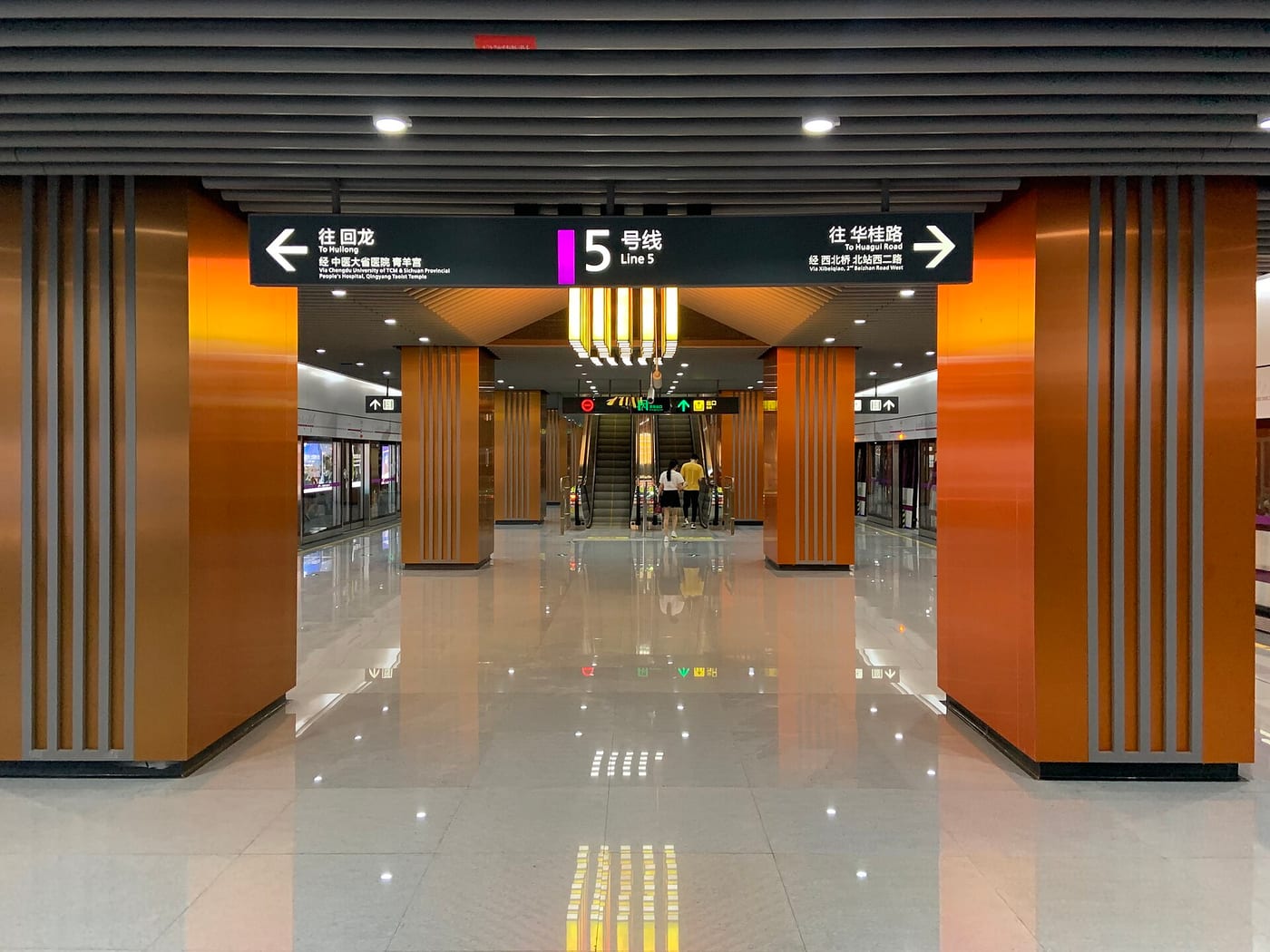
Photo: 来斤小仓鼠吧 / CC BY-SA 4.0, via Wikimedia Commons
Best time to visit
March–May and September–November bring mild temperatures ideal for outdoor teahouses and morning panda walks.
July and August are hot, muggy, and rainy (making a 07:30 Panda Base arrival even more critical). December to February rarely drops below freezing, but damp overcast air and unheated interiors require a light down jacket and thermal base layers—see the month-by-city China packing table.
Common mistakes
- Arriving at the Panda Base at 10:30: by late morning the pandas are asleep indoors and the walkways are jammed with tour groups.
- Mixing up Tianfu Airport (TFU) and Shuangliu Airport (CTU): TFU is 60 km outside town—budget well over an hour to reach it.
- Eating full meals on the main tourist strip of Kuanzhai Alley: stroll through Kuanzhai Alley in twenty minutes to see the courtyard facades, then walk five minutes over to Kuixinglou Street or Binsheng Street to eat where locals go.
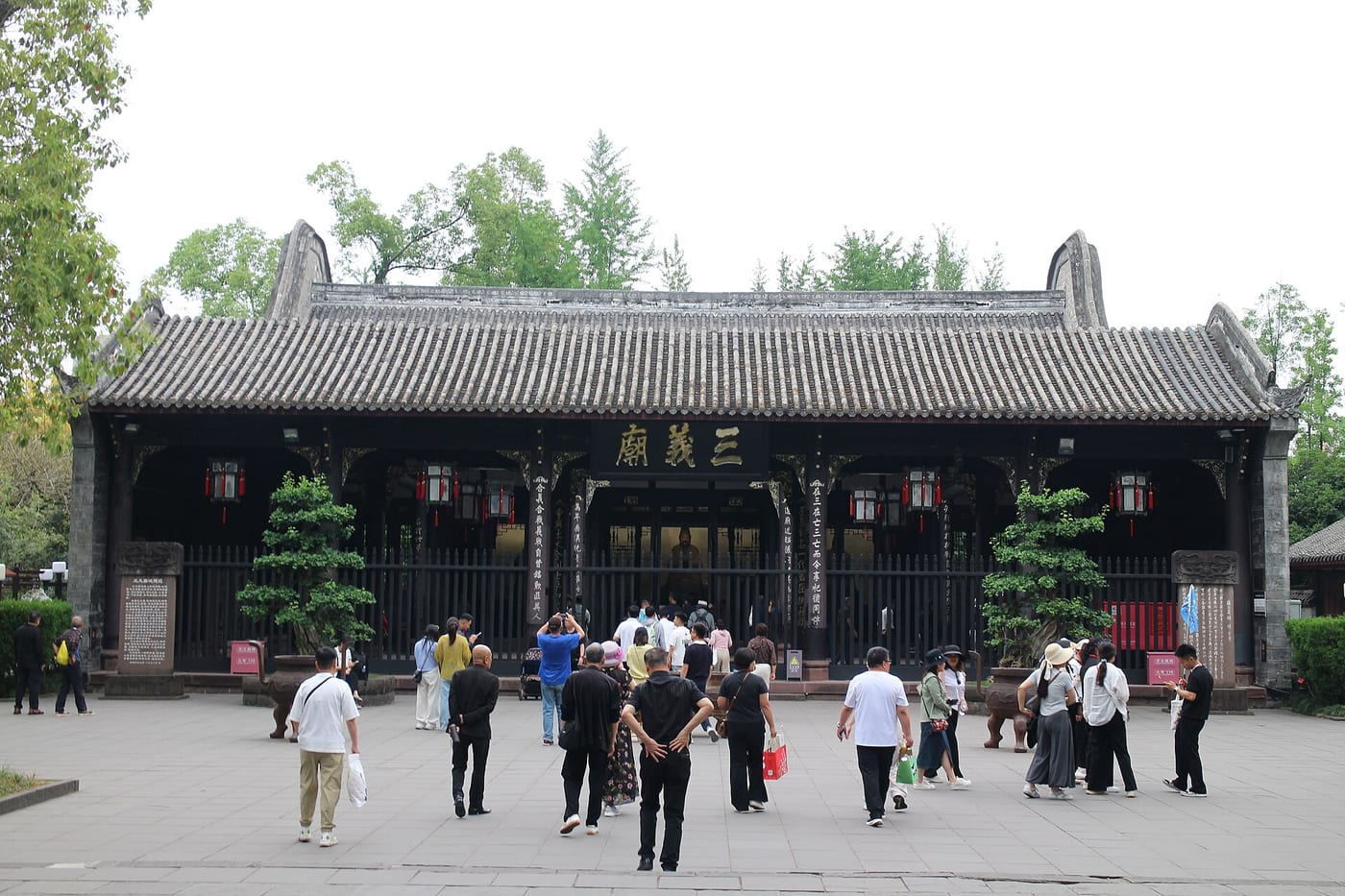
Photo: Suicasmo / CC0, via Wikimedia Commons
Compare China hotels Browse China tickets
Affiliate link. Compare prices on the partner site before you pay.
Questions visitors ask
- Is Chengdu worth visiting, and how many days do I need?
- Yes—if you want to see giant pandas, sit in open-air teahouses, and eat Sichuan food on flat streets. Spend 3 days for the city and Panda Base, or 4 days if you add a high-speed train day trip to the Leshan Giant Buddha or Sanxingdui.
- Do I really have to arrive at the Chengdu Panda Base at 07:30?
- Yes. Pandas dislike heat and are active during their 08:00–10:00 morning feeding. By 10:30, tour buses pack the paths while the pandas nap indoors with their backs to the glass.
- Can I visit Chongqing as a day trip from Chengdu?
- The high-speed train takes only 1 to 1.5 hours, but station transfers on both ends eat the day. Give Chengdu and Chongqing 2 to 3 nights each instead.